Nitrogen Gas Generator A Smart Solution for Reducing Costs and Improving Industrial Efficiency
What is a Nitrogen Gas Generator ?
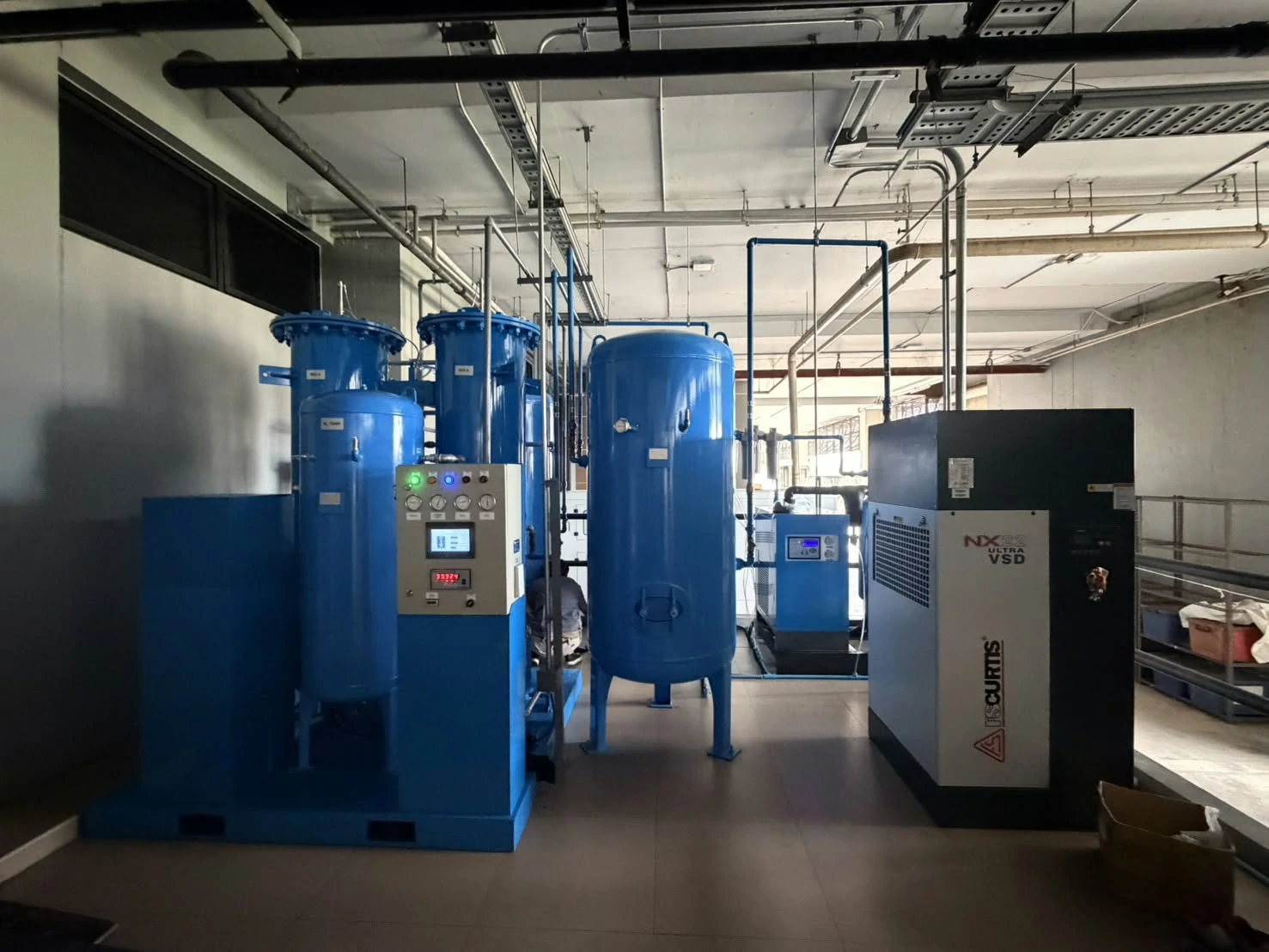
A Nitrogen Gas Generator is a system designed to separate nitrogen (N₂) from compressed air and supply it for industrial applications. Instead of relying on external gas suppliers, factories can produce nitrogen on-site, ensuring continuous availability, cost control, and consistent quality.
This modern technology allows businesses to generate nitrogen safely, efficiently, and on demand.
Key Benefits of a Nitrogen Generator
✅ Significant Cost Reduction
Eliminate the need to purchase nitrogen in cylinders or liquid form. Reduce expenses related to transportation, storage, and supplier dependency.
✅ Continuous Nitrogen Production
The system operates 24/7, providing a stable nitrogen supply. It supports high-capacity production, such as 50.9 m³/hr, as shown in the system configuration.
✅ Adjustable Purity Levels
Nitrogen purity can be customized based on application requirements, such as:
95%
99%
99.999%
✅ Improved Safety and Convenience
On-site production reduces risks associated with handling high-pressure gas cylinders and minimizes storage requirements.

How Does a Nitrogen Generator Work ?
Nitrogen generators separate nitrogen from air using advanced technologies
1. PSA (Pressure Swing Adsorption)
This method uses Carbon Molecular Sieve (CMS) to adsorb oxygen, allowing high-purity nitrogen to pass through.
2. Membrane Technology
This system uses selective membranes to separate gases, ideal for applications requiring continuous flow and stable performance.
Industrial Applications of Nitrogen Generators
Nitrogen generators are widely used across multiple industries, including
Food industry → Prevents oxidation and extends shelf life (food packaging)
Electronics → Protects components from moisture and oxidation
Metal industry → Used in welding and heat treatment
Pharmaceutical → Maintains product quality and stability
General manufacturing → Used as an inert gas in various processes
Why Modern Industries Choose Nitrogen Generators
Switching to on-site nitrogen generation offers clear advantages:
Better cost control
Reduced reliance on external suppliers
Continuous production without interruption
Minimized downtime
Enhanced operational safety
How to Choose the Right Nitrogen Generator
Before selecting a system, consider the following factors:
Required flow rate (m³/hr)
Desired nitrogen purity level
Installation space
Existing air compressor system
Maintenance requirements
A Nitrogen Gas Generator is a smart investment for modern industries seeking to reduce costs, improve efficiency, and maintain consistent quality.
If your business relies on nitrogen regularly, generating it on-site is a reliable and cost-effective solution that enhances productivity and long-term performance.
Nitrogen Gas Generator A Smart Solution for Reducing Costs and Improving Industrial Efficiency
What is a Nitrogen Gas Generator ?
A Nitrogen Gas Generator is a system designed to separate nitrogen (N₂) from compressed air and supply it for industrial applications. Instead of relying on external gas suppliers, factories can produce nitrogen on-site, ensuring continuous availability, cost control, and consistent quality.
This modern technology allows businesses to generate nitrogen safely, efficiently, and on demand.
Key Benefits of a Nitrogen Generator
✅ Significant Cost Reduction
Eliminate the need to purchase nitrogen in cylinders or liquid form. Reduce expenses related to transportation, storage, and supplier dependency.
✅ Continuous Nitrogen Production
The system operates 24/7, providing a stable nitrogen supply. It supports high-capacity production, such as 50.9 m³/hr, as shown in the system configuration.
✅ Adjustable Purity Levels
Nitrogen purity can be customized based on application requirements, such as:
95%
99%
99.999%
✅ Improved Safety and Convenience
On-site production reduces risks associated with handling high-pressure gas cylinders and minimizes storage requirements.
How Does a Nitrogen Generator Work ?
Nitrogen generators separate nitrogen from air using advanced technologies:
1. PSA (Pressure Swing Adsorption)
This method uses Carbon Molecular Sieve (CMS) to adsorb oxygen, allowing high-purity nitrogen to pass through.
2. Membrane Technology
This system uses selective membranes to separate gases, ideal for applications requiring continuous flow and stable performance.
Industrial Applications of Nitrogen Generators
Nitrogen generators are widely used across multiple industries, including:
Food industry → Prevents oxidation and extends shelf life (food packaging)
Electronics → Protects components from moisture and oxidation
Metal industry → Used in welding and heat treatment
Pharmaceutical → Maintains product quality and stability
General manufacturing → Used as an inert gas in various processes
Why Modern Industries Choose Nitrogen Generators
Switching to on-site nitrogen generation offers clear advantages:
Better cost control
Reduced reliance on external suppliers
Continuous production without interruption
Minimized downtime
Enhanced operational safety
How to Choose the Right Nitrogen Generator
Before selecting a system, consider the following factors:
Required flow rate (m³/hr)
Desired nitrogen purity level
Installation space
Existing air compressor system
Maintenance requirements
A Nitrogen Gas Generator is a smart investment for modern industries seeking to reduce costs, improve efficiency, and maintain consistent quality.
If your business relies on nitrogen regularly, generating it on-site is a reliable and cost-effective solution that enhances productivity and long-term performance.
Nitrogen Gas Generator A Smart Solution for Reducing Costs and Improving Industrial Efficiency
What is a Nitrogen Gas Generator ?
A Nitrogen Gas Generator is a system designed to separate nitrogen (N₂) from compressed air and supply it for industrial applications. Instead of relying on external gas suppliers, factories can produce nitrogen on-site, ensuring continuous availability, cost control, and consistent quality.
This modern technology allows businesses to generate nitrogen safely, efficiently, and on demand.
Key Benefits of a Nitrogen Generator
✅ Significant Cost Reduction
Eliminate the need to purchase nitrogen in cylinders or liquid form. Reduce expenses related to transportation, storage, and supplier dependency.
✅ Continuous Nitrogen Production
The system operates 24/7, providing a stable nitrogen supply. It supports high-capacity production, such as 50.9 m³/hr, as shown in the system configuration.
✅ Adjustable Purity Levels
Nitrogen purity can be customized based on application requirements, such as
95%
99%
99.999%
✅ Improved Safety and Convenience
On-site production reduces risks associated with handling high-pressure gas cylinders and minimizes storage requirements.
How Does a Nitrogen Generator Work ?
Nitrogen generators separate nitrogen from air using advanced technologies:
1. PSA (Pressure Swing Adsorption)
This method uses Carbon Molecular Sieve (CMS) to adsorb oxygen, allowing high-purity nitrogen to pass through.
2. Membrane Technology
This system uses selective membranes to separate gases, ideal for applications requiring continuous flow and stable performance.
Industrial Applications of Nitrogen Generators
Nitrogen generators are widely used across multiple industries, including:
Food industry → Prevents oxidation and extends shelf life (food packaging)
Electronics → Protects components from moisture and oxidation
Metal industry → Used in welding and heat treatment
Pharmaceutical → Maintains product quality and stability
General manufacturing → Used as an inert gas in various processes
Why Modern Industries Choose Nitrogen Generators
Switching to on-site nitrogen generation offers clear advantages:
Better cost control
Reduced reliance on external suppliers
Continuous production without interruption
Minimized downtime
Enhanced operational safety
How to Choose the Right Nitrogen Generator
Before selecting a system, consider the following factors:
Required flow rate (m³/hr)
Desired nitrogen purity level
Installation space
Existing air compressor system
Maintenance requirements
A Nitrogen Gas Generator is a smart investment for modern industries seeking to reduce costs, improve efficiency, and maintain consistent quality.
If your business relies on nitrogen regularly, generating it on-site is a reliable and cost-effective solution that enhances productivity and long-term performance.